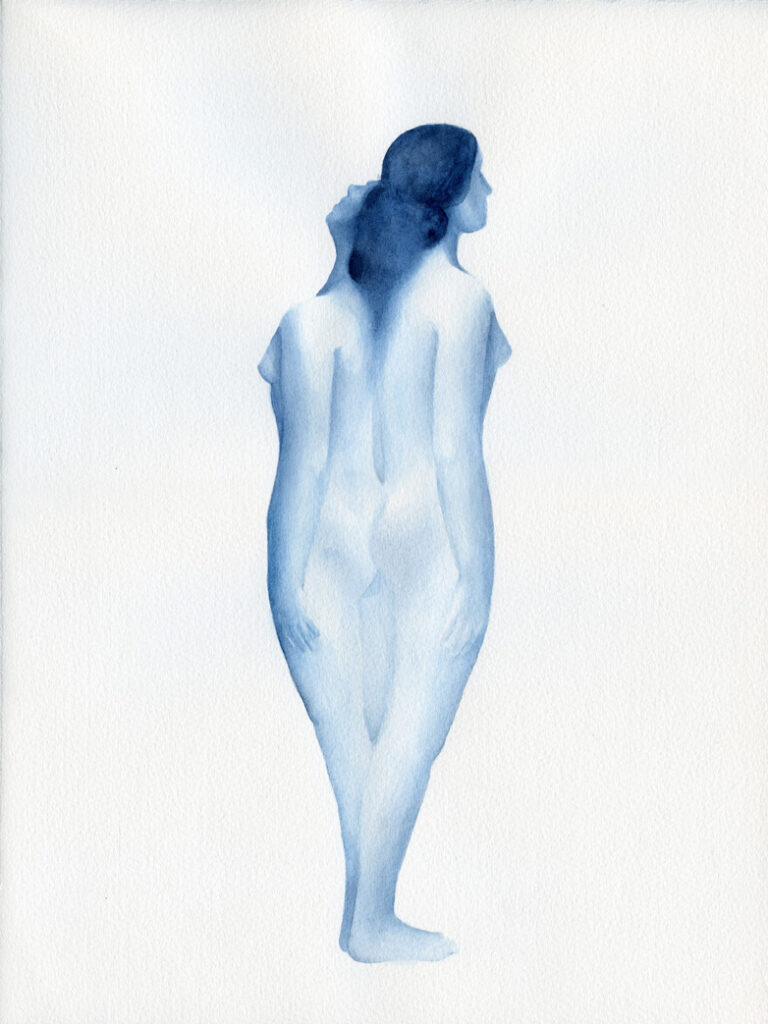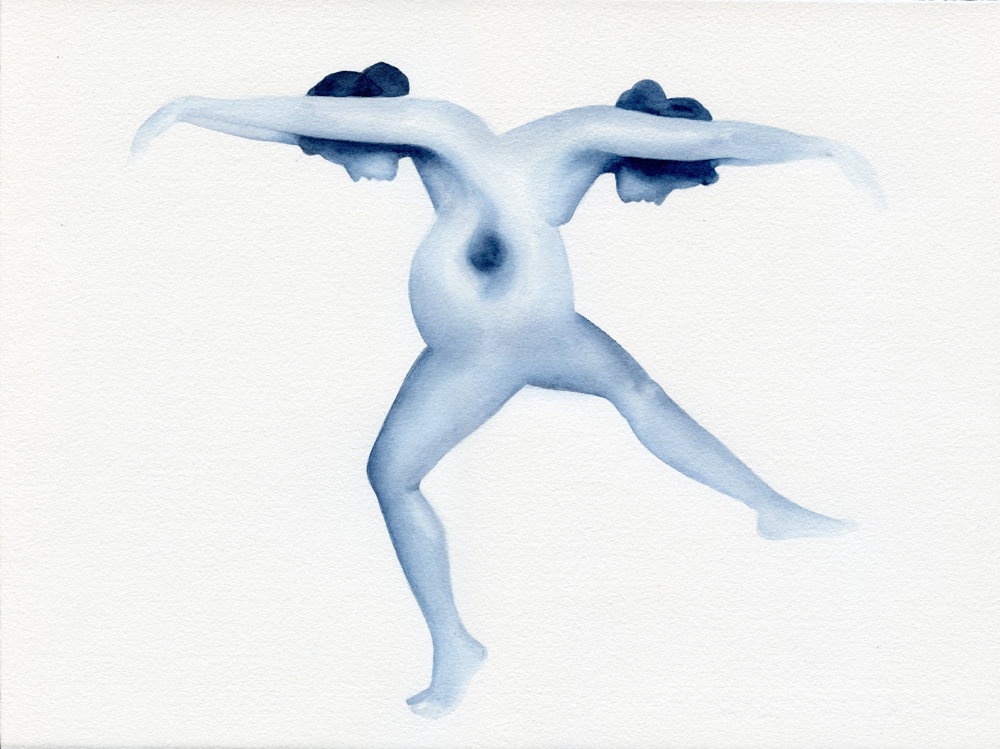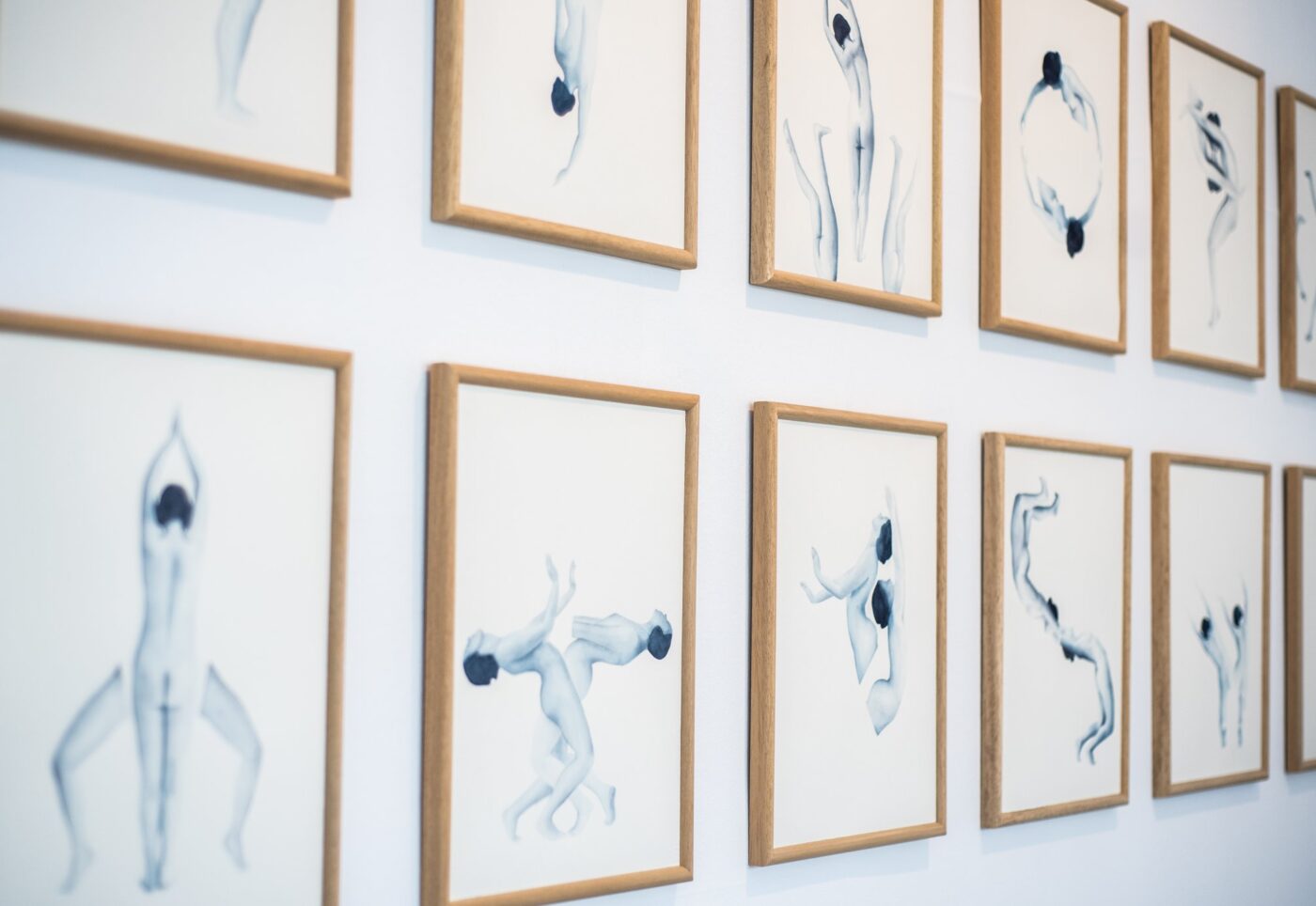
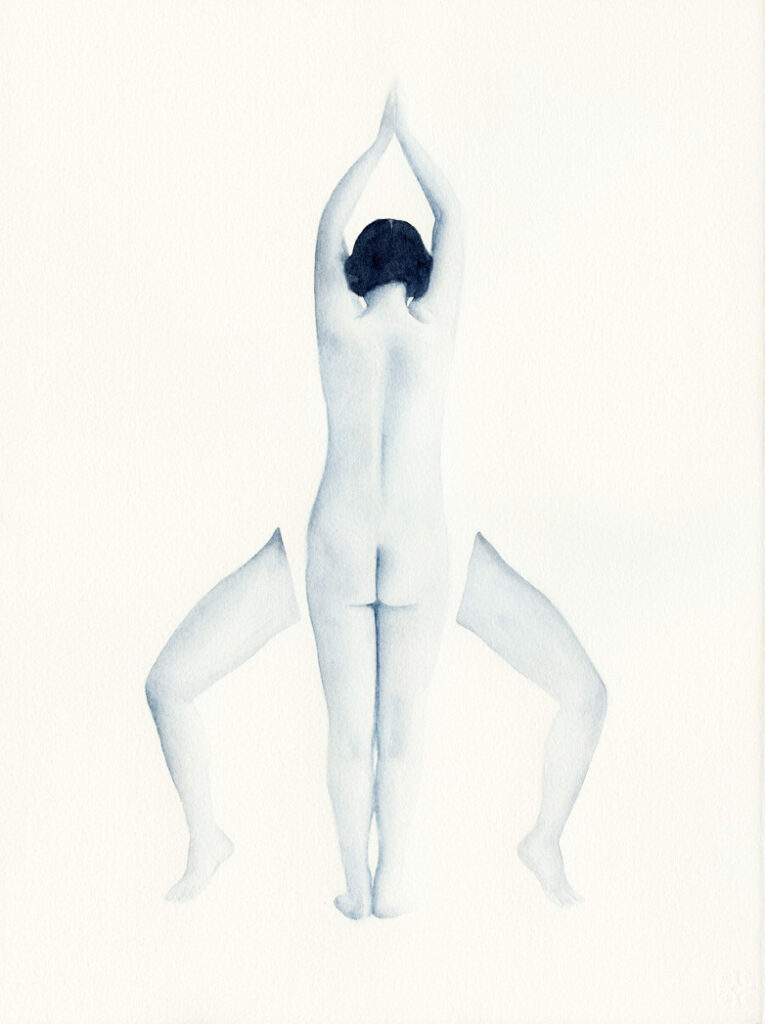
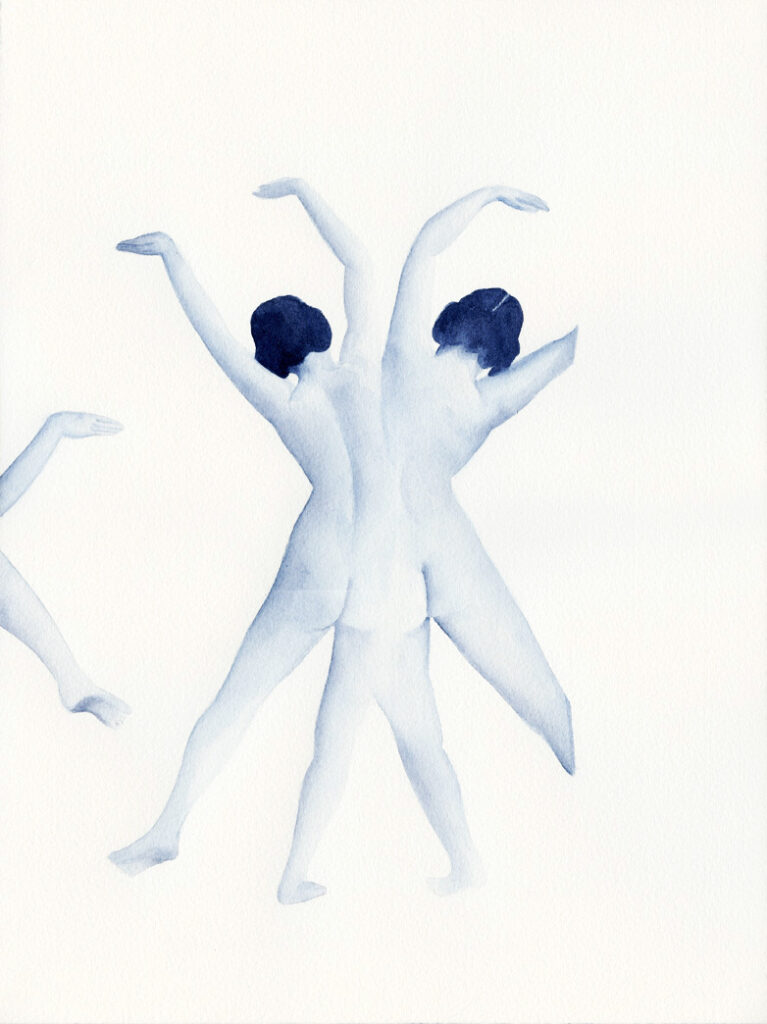
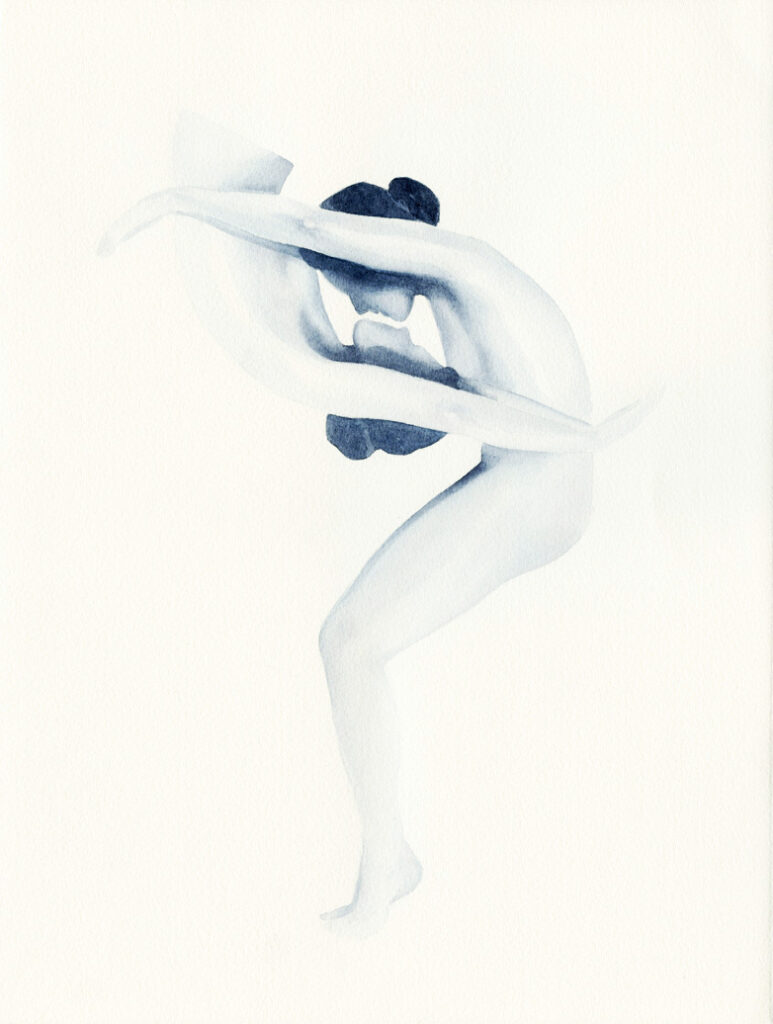
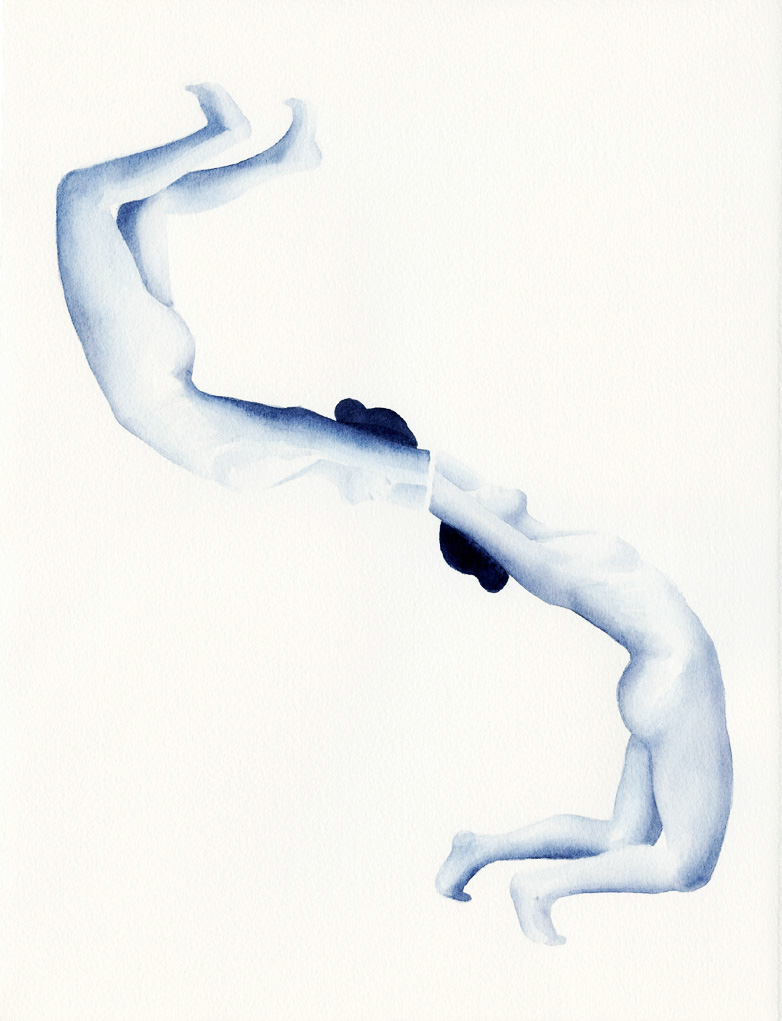
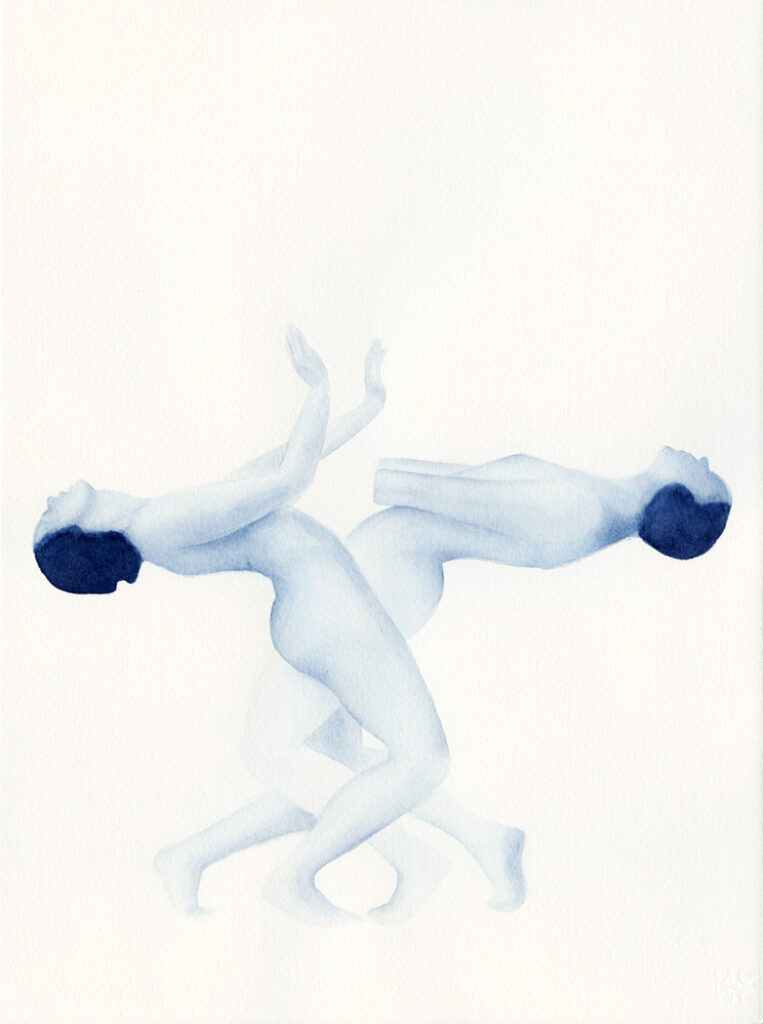
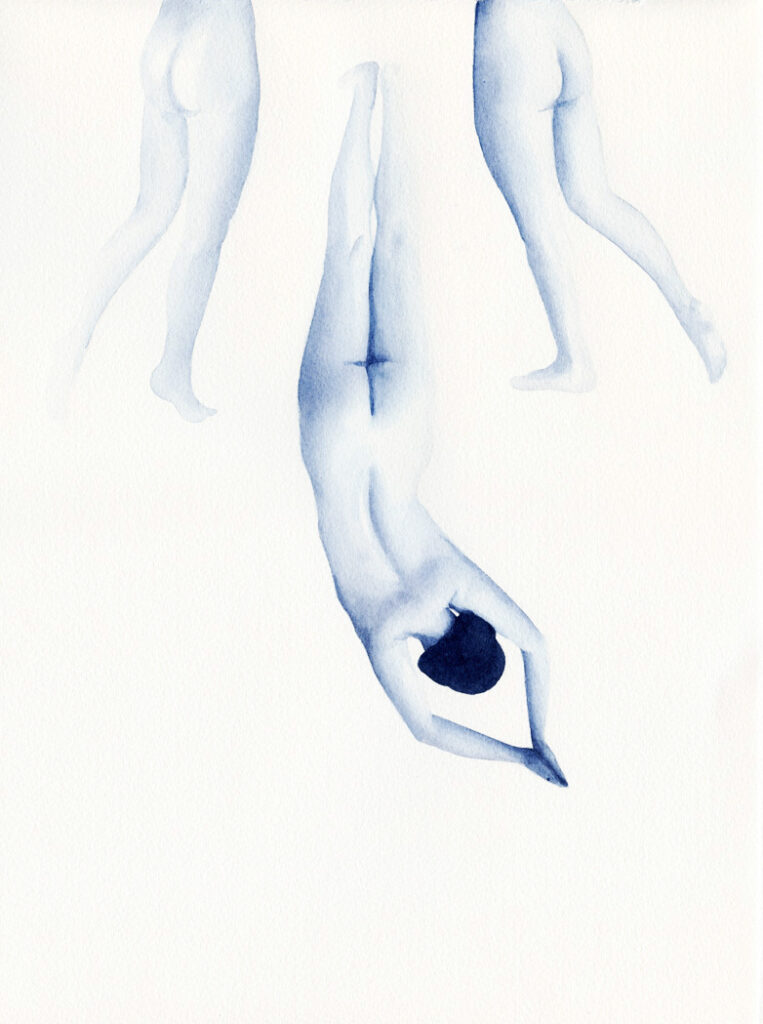
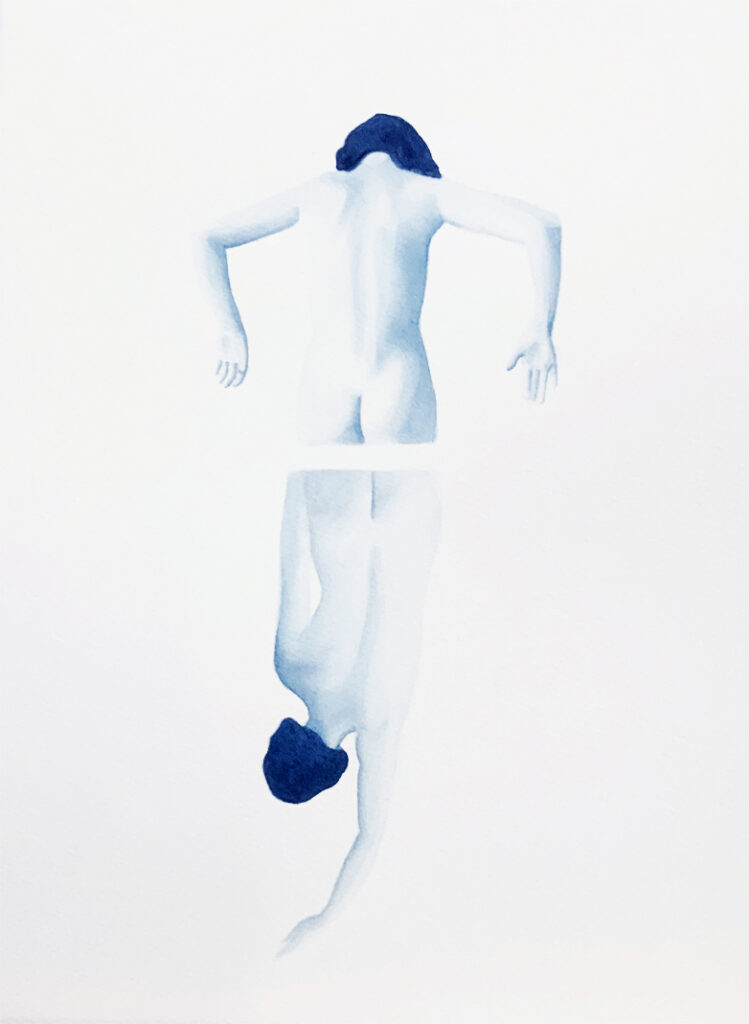
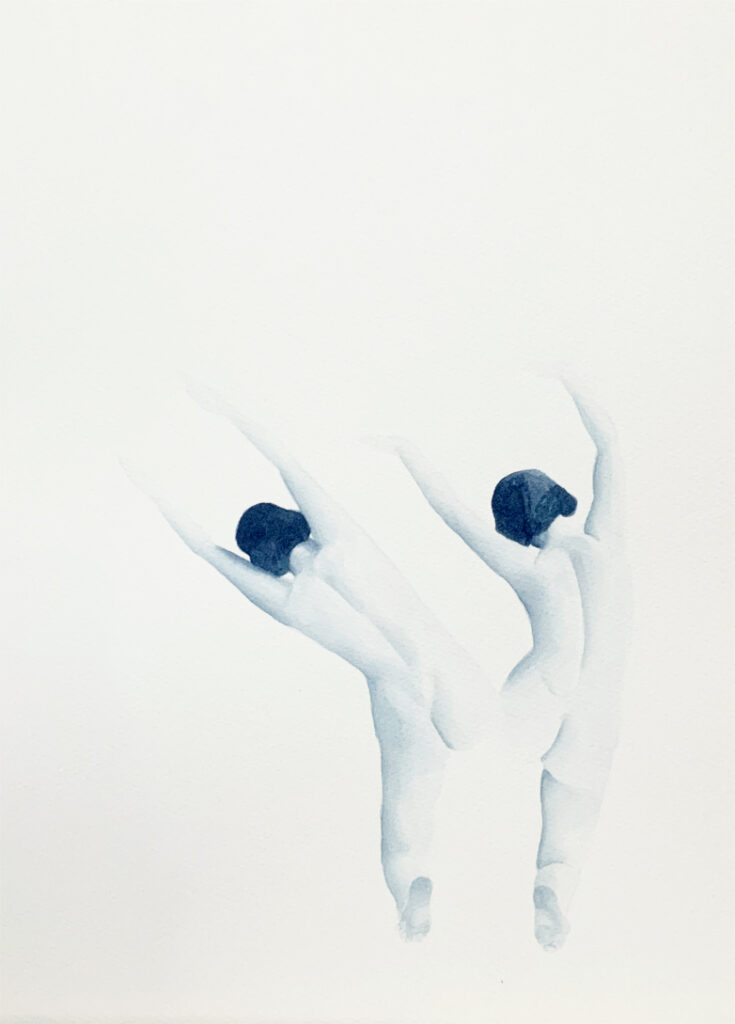
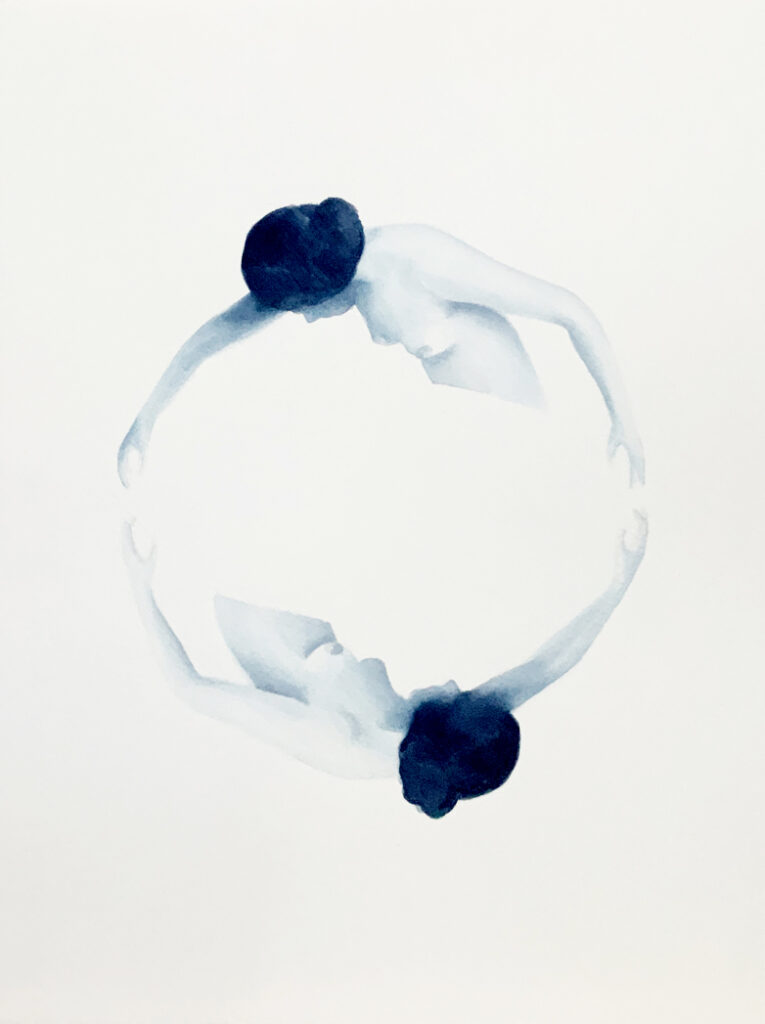
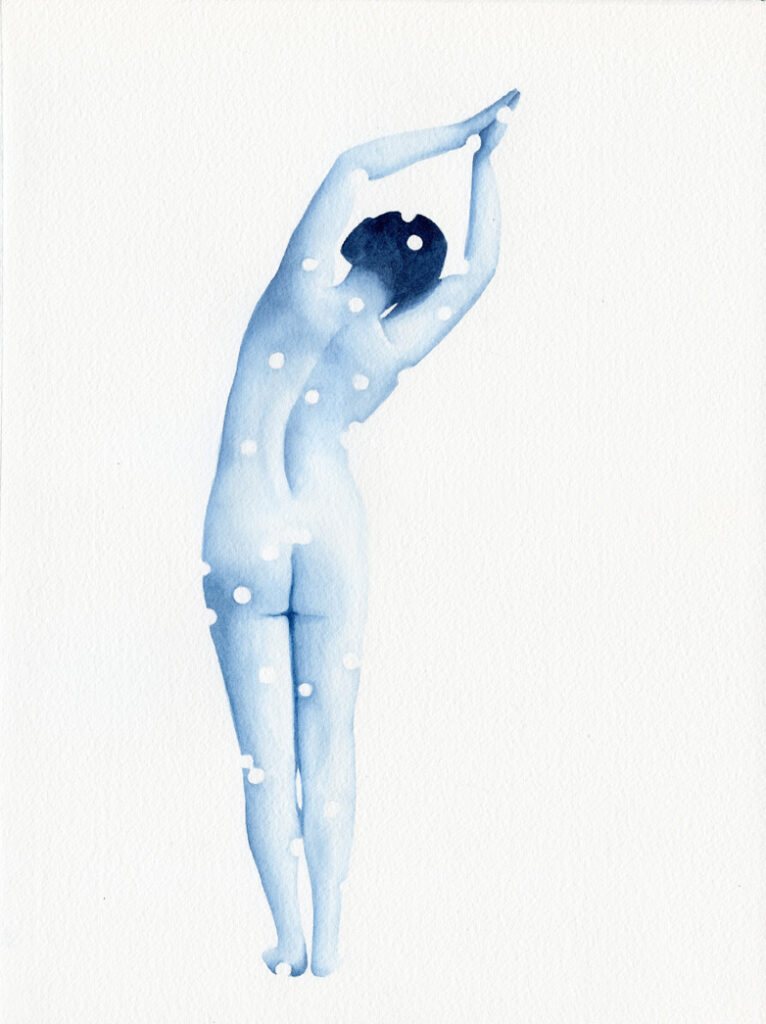
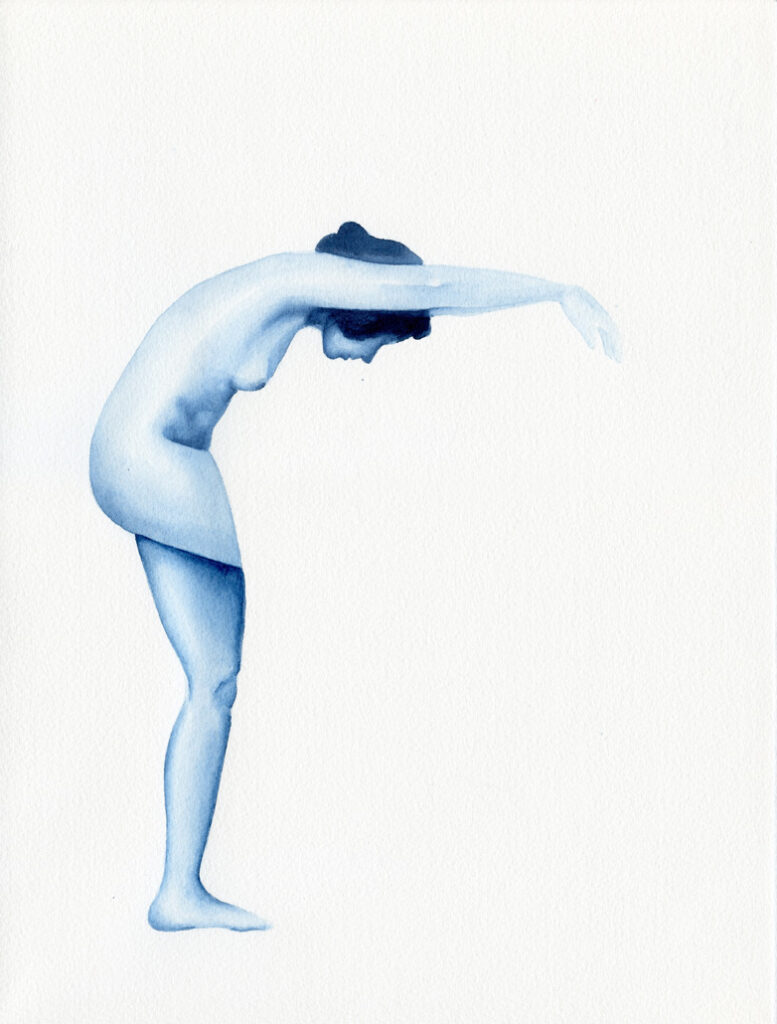
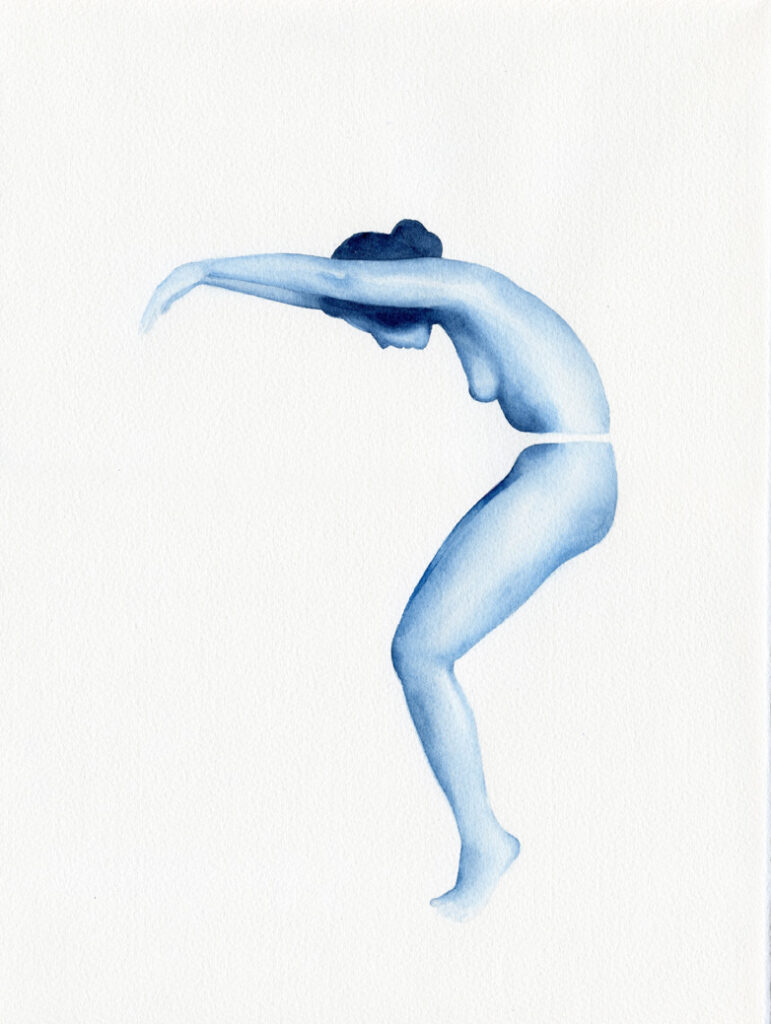
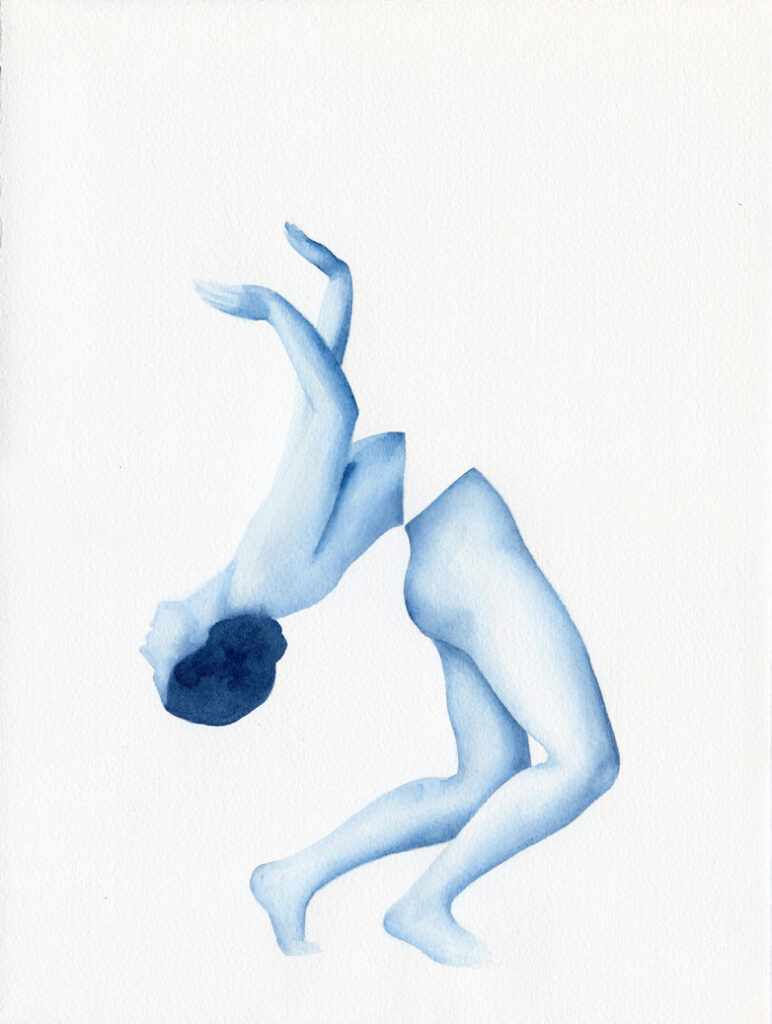
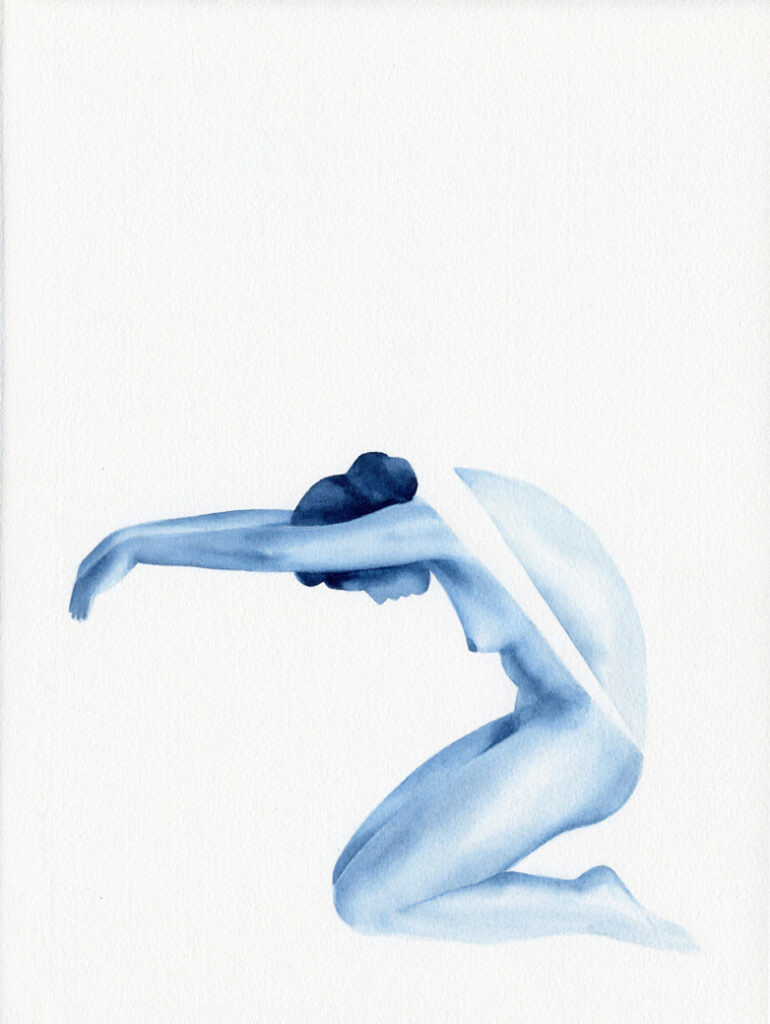
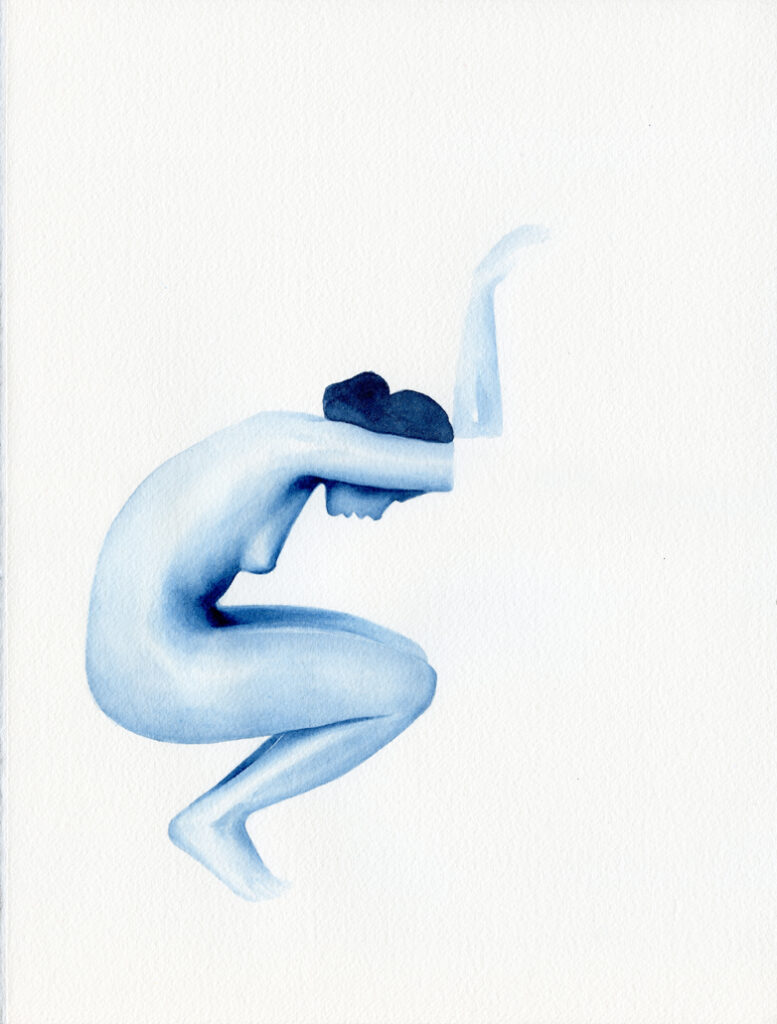
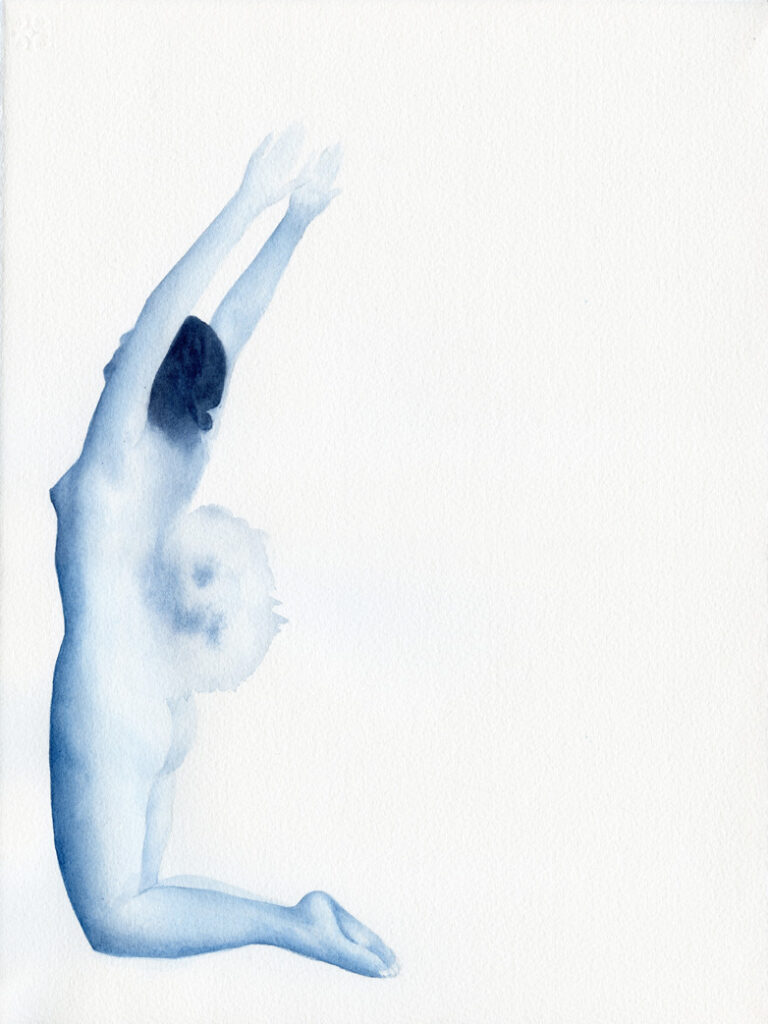
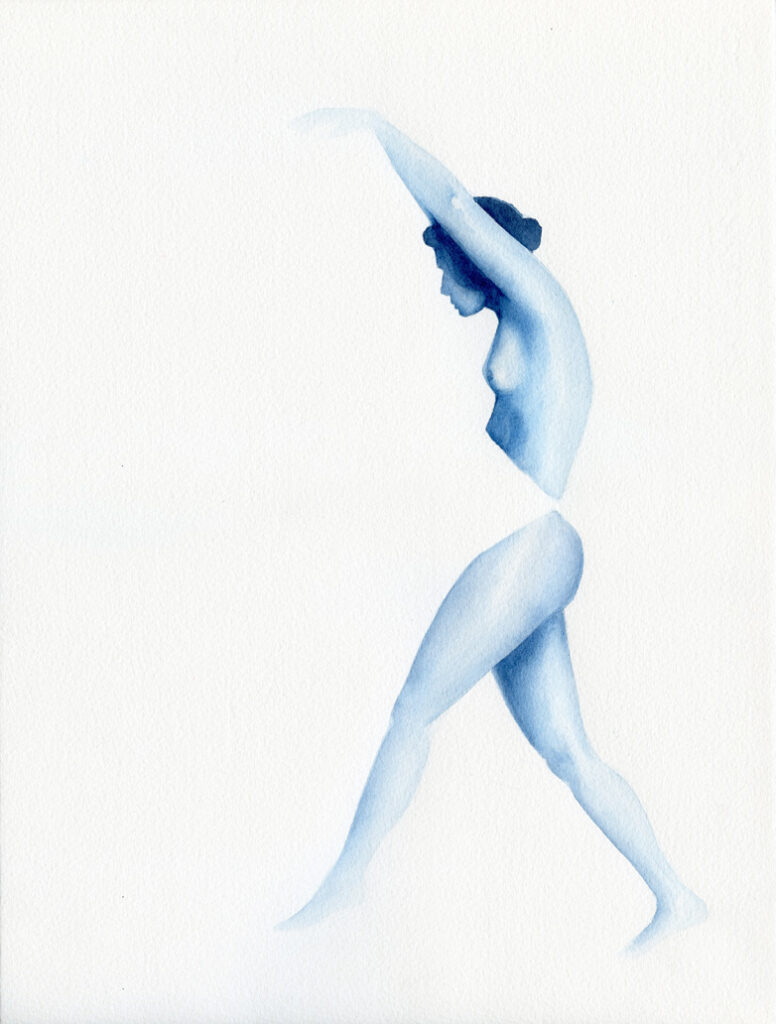
The inspiration for this work was a 1925 exercise manual for women (Kultura ciała kobiecego / The Culture of the Female Body); this small booklet contains photographs showing successive phases of exercises. In the manual, aesthetics seem more important than the original purpose of the photographs.
Culture tries to ignore the body when it embodies the emotional and the spiritual. Body language communicates often unconscious emotions; the reaction can be an accelerated heart rate, a feeling of helplessness, but also pain. The “cultured body” is a mute body—or rather, an unheard one. In this painted collage, I dismember the body. Lacking arms and legs, I cannot touch myself. This fragmentation of the body—puncturing it, cutting it, merging it with another body—symbolizes traumas both experienced and still present. The theatricality of the gestures and poses strips the compositions of suffering. The figures remain unaware of their own pain, loss, and entanglement.
Inspiracją dla tej pracy był instruktaż ćwiczeń dla kobiet z 1925 roku (Kultura ciała kobiecego), ta niewielkich rozmiarów książeczka zawiera zdjęcia z kolejnymi fazami ćwiczeń. W instruktażu ważniejsza wydaje się estetyka niż cel powstania fotografii.
Kultura stara się ignorować ciało kiedy ucieleśnia ono to, co emocjonalne i duchowe. Język ciała informuje o często nieświadomych emocjach, reakcją może być przyspieszone tętno, uczucie bezwładu, ale i ból. Ciało kulturalne to ciało nieme, a raczej niewysłuchane. W malarskim kolażu ćwiartuję ciało. Nie mogę się dotknąć, pozbawiona nóg i rąk. To rozczłonkowanie ciała, dziurawienie go, cięcie, przenikanie z drugim ciałem to symbole przeżytych i wciąż obecnych traum. Teatralność gestów i póz sprawia, że kompozycje są pozbawione cierpienia. Postacie są nieświadome swojego bólu, straty i uwikłania.
Body Culture. Part I
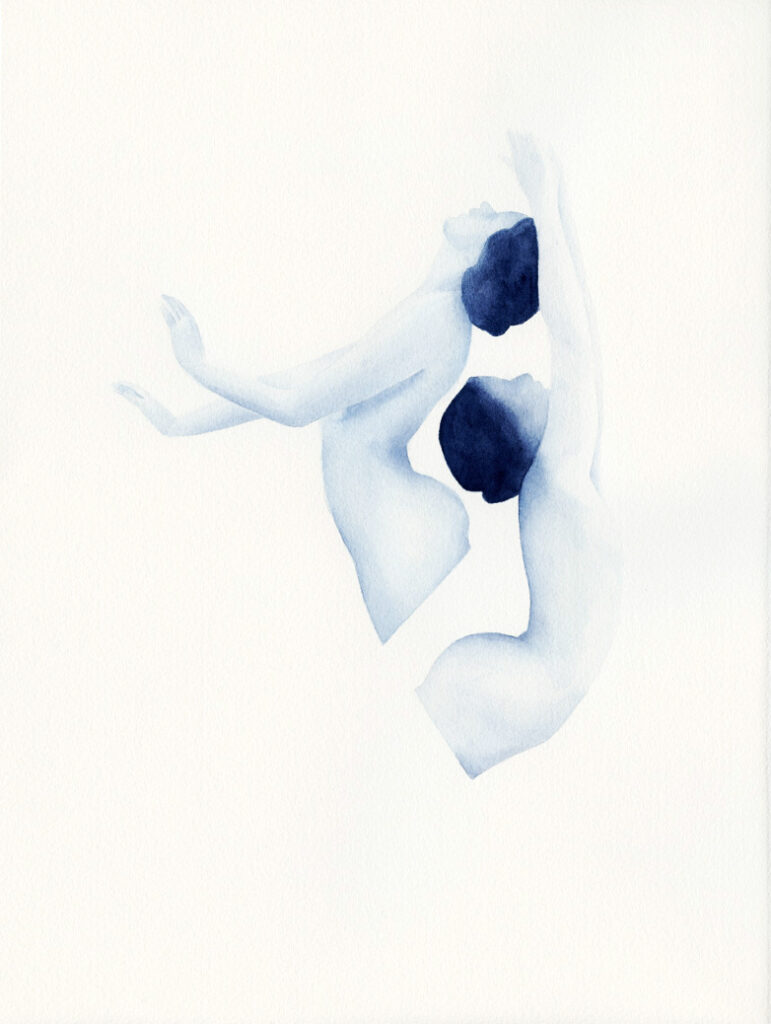

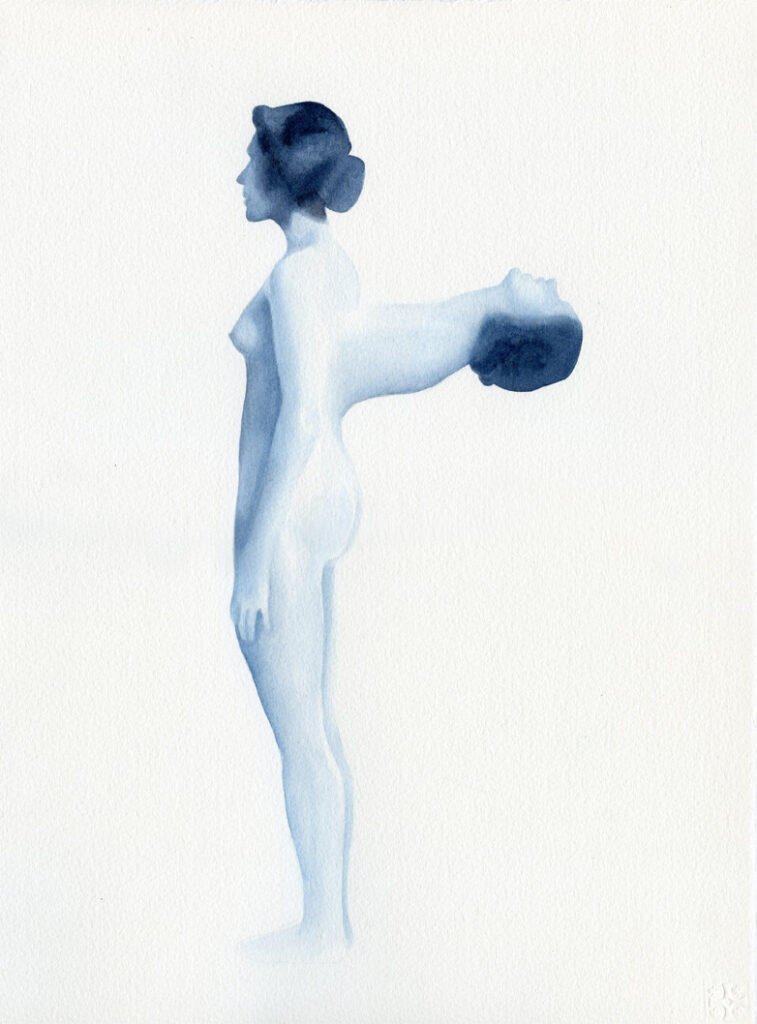
Body Culture. Part II
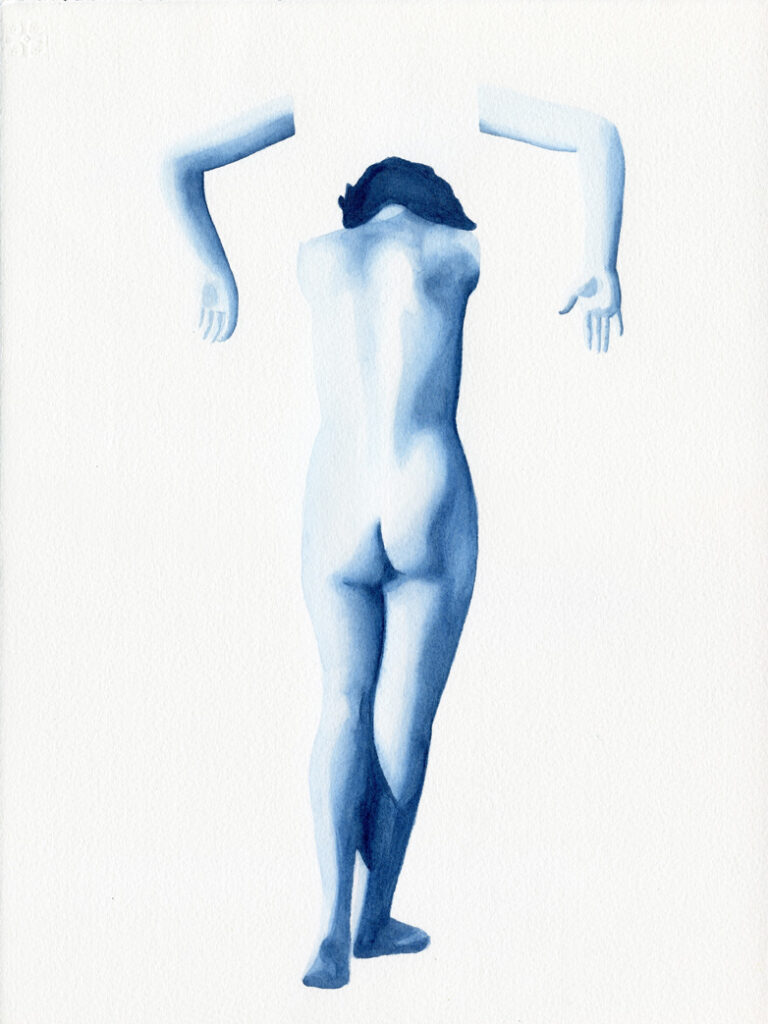
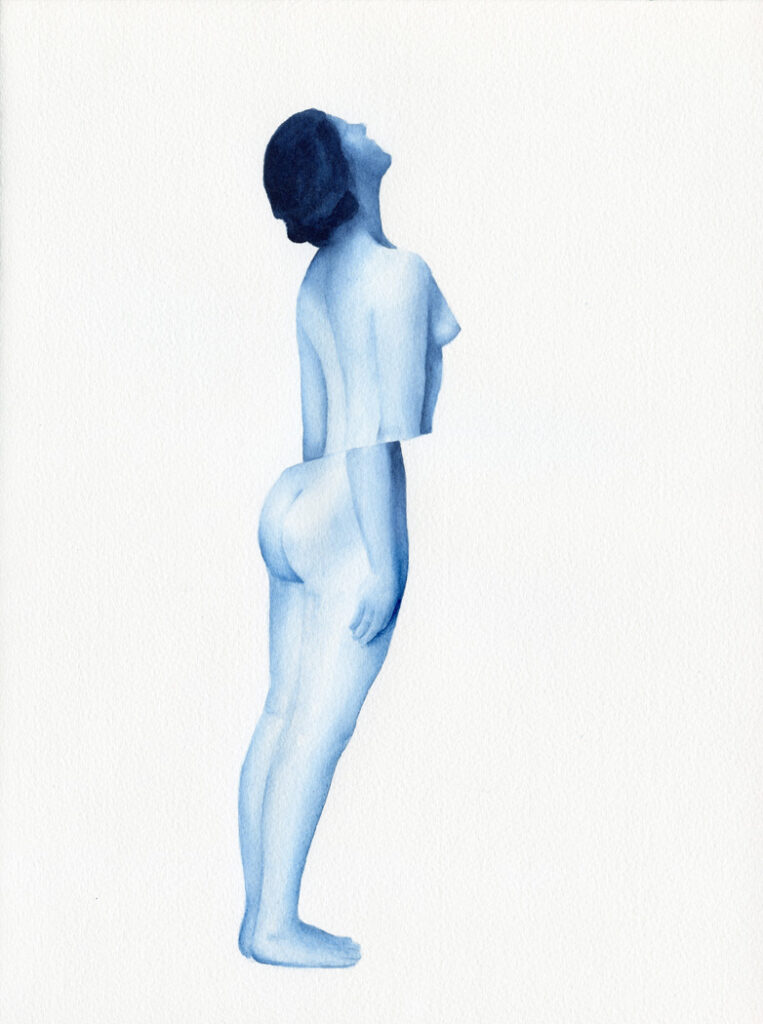
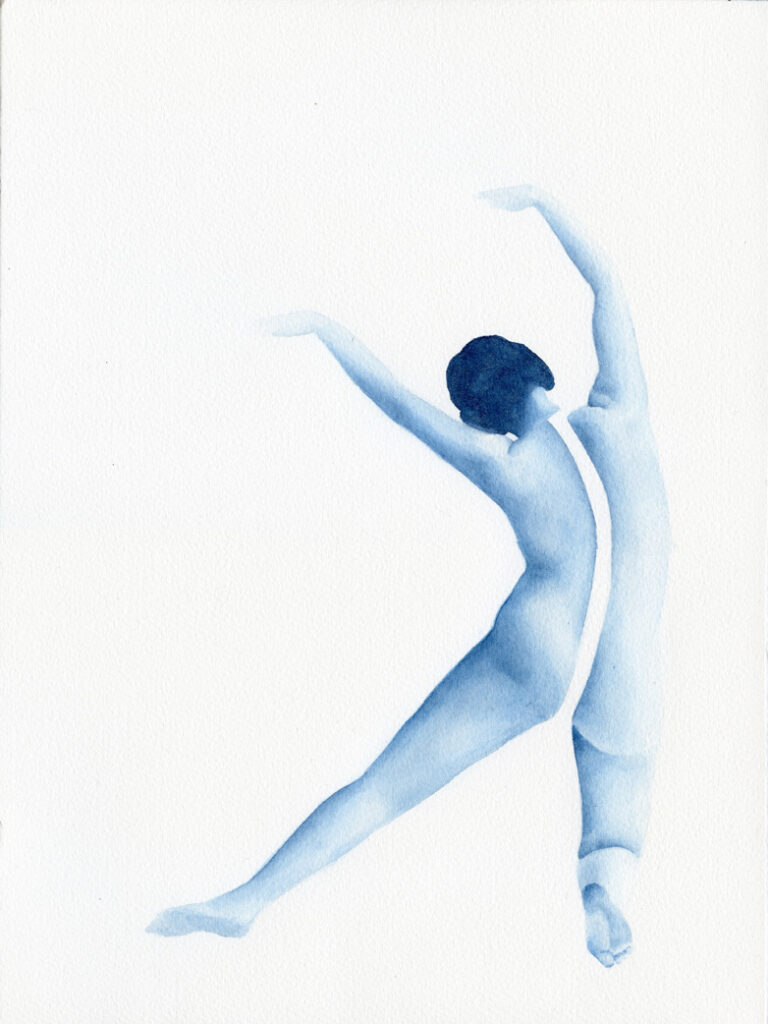
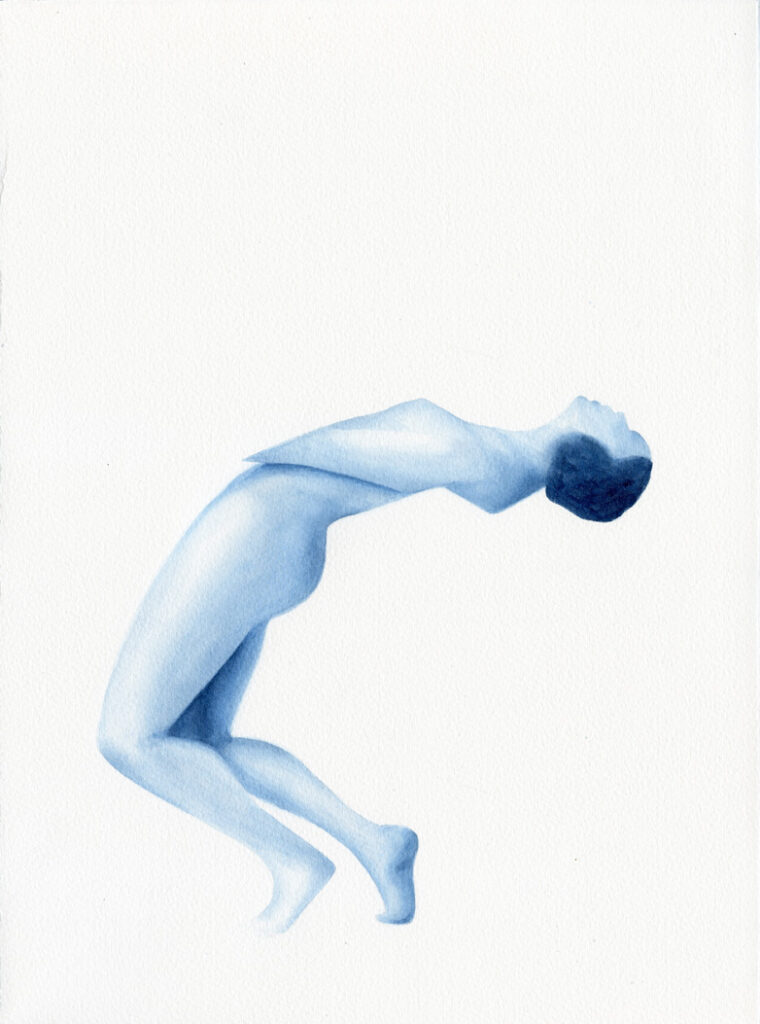
Body Culture. Part III (symbiosis)